# Pricing
Upstash Workflow is based on QStash and uses a "pay-as-you-go" pricing model. You only incur costs when your app receives traffic, meaning there's no charge when it's not in use. Click [here](https://upstash.com/pricing/workflow) to view the pricing.
A workflow run consists of several QStash messages, with the total cost determined by the number of messages used.
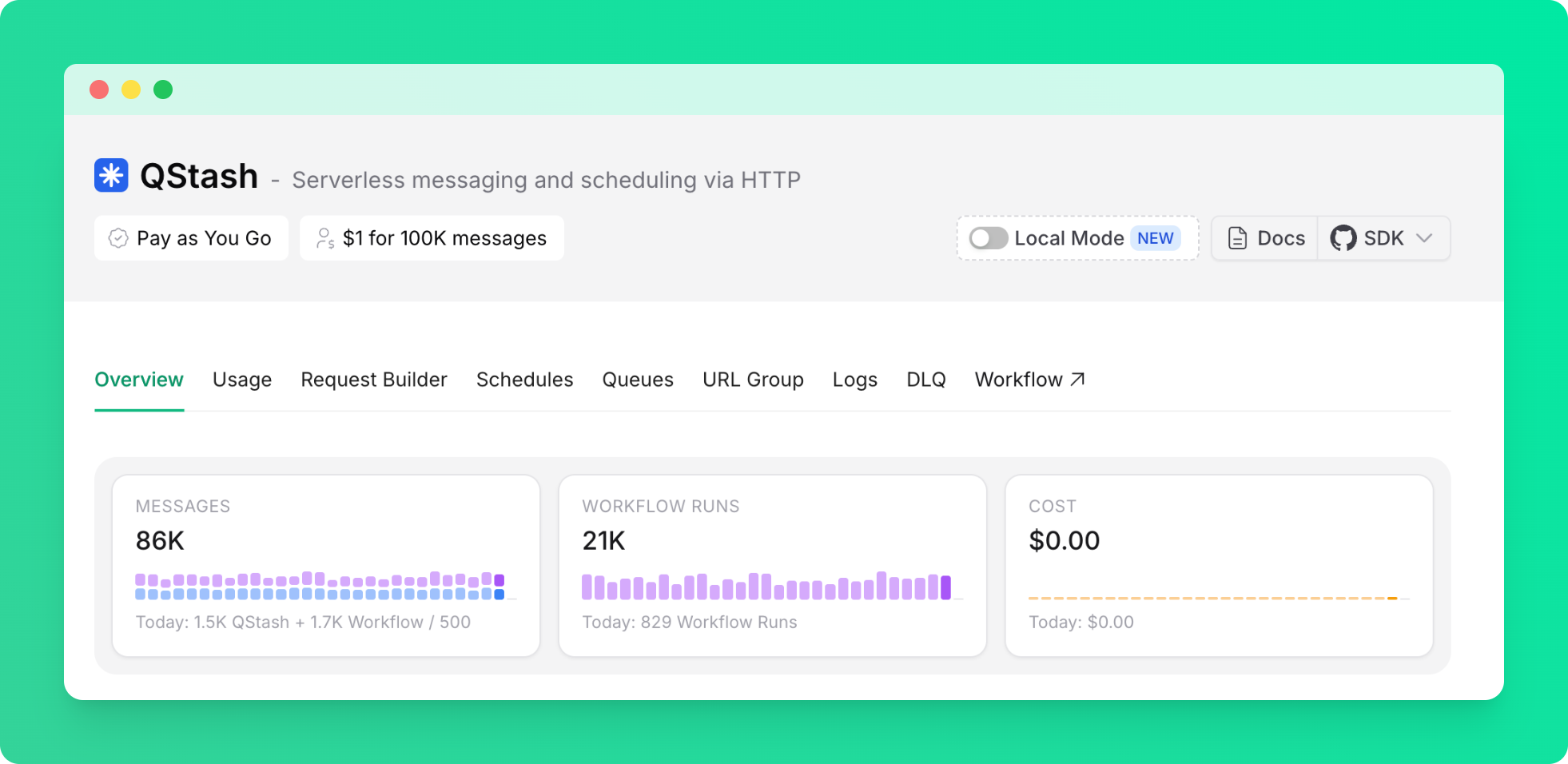
You can track your current message usage and associated costs in the [Overview tab of the console](https://console.upstash.com/qstash?tab=details).
 For detailed pricing information based on different plans, visit our [Workflow pricing page](https://upstash.com/pricing/workflow).
### Message Usage per Workflow Run
- [context.run](/workflow/basics/context#context-run), [context.sleep](/workflow/basics/context#context-sleep), [context.sleepUntil](/workflow/basics/context#context-sleepuntil), or [context.waitForEvent](/workflow/basics/context#context-waitforevent) commands generate a single message.
- The [context.call](/workflow/basics/context#context-call) command generates two messages.
- Each step in a [parallel run](/workflow/howto/parallel-runs) costs 1 extra message.
- If the workflow endpoint or URL in [context.call](/workflow/basics/context#context-call) returns an error or is unreachable, the workflow SDK will retry the call (up to 3 times by default). Each retry counts as a new message.
For detailed pricing information based on different plans, visit our [Workflow pricing page](https://upstash.com/pricing/workflow).
### Message Usage per Workflow Run
- [context.run](/workflow/basics/context#context-run), [context.sleep](/workflow/basics/context#context-sleep), [context.sleepUntil](/workflow/basics/context#context-sleepuntil), or [context.waitForEvent](/workflow/basics/context#context-waitforevent) commands generate a single message.
- The [context.call](/workflow/basics/context#context-call) command generates two messages.
- Each step in a [parallel run](/workflow/howto/parallel-runs) costs 1 extra message.
- If the workflow endpoint or URL in [context.call](/workflow/basics/context#context-call) returns an error or is unreachable, the workflow SDK will retry the call (up to 3 times by default). Each retry counts as a new message.